Pennsylvania measles outbreak threatens health beyond US borders
More than twenty years after measles was declared eliminated in the United States, the country is now facing its deadliest resurgence of the disease since 2000. The Centers for Disease Control and Prevention announced this week the third measles death of the year, underscoring a growing crisis.
Matt Ferrari, director of the Center for Infectious Disease Dynamics at Pennsylvania State University, said the nation’s success in eradicating measles gave it “the luxury to forget” how serious the illness can be. “It’s been a long time, and for many of us in the United States, and in fact throughout the Western Hemisphere, we have been able to forget how nasty measles is,” he told Al Jazeera.
Pennsylvania has been hit especially hard. State officials have logged more than 1,200 cases and over 240 hospitalizations across 42 counties this year. In September the state asked the CDC for emergency assistance, even as state and federal health agencies debated how to count measles‑related deaths.
The surge has raised alarms in neighboring states. On October 5, New York Governor Kathy Hochul declared a state disaster emergency, expanding the pool of health workers authorized to vaccinate and test for measles. “No one should get seriously ill or die from a vaccine‑preventable disease,” Hochul said.
Experts warn that the danger extends far beyond state lines. The United States is experiencing a rise in measles cases at a time when global numbers are also climbing, especially in communities skeptical of vaccines or lacking adequate health care. Vaccination coverage among kindergarteners fell from 95.2 percent in the 2019‑2020 school year to 92.4 percent in the 2025‑2026 year. Declining rates in one region can leave people thousands of miles away vulnerable, making measles prevention a shared global responsibility.
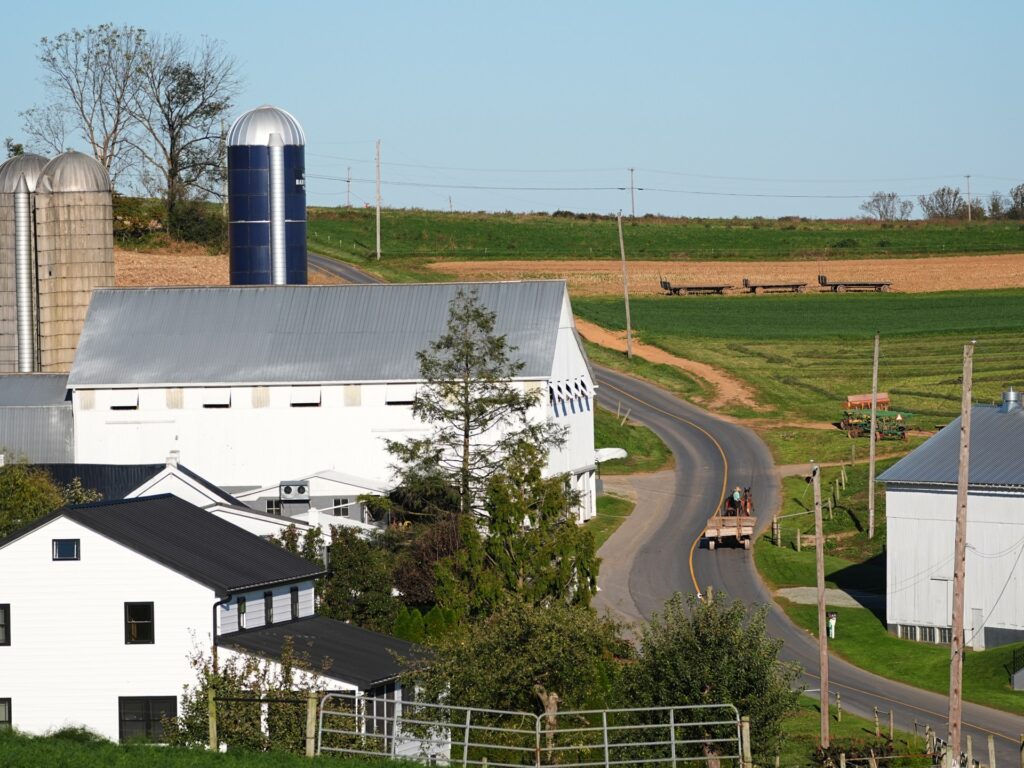
In August, Pennsylvania reported two measles deaths among unvaccinated residents of Lancaster County, the heart of the state’s Amish and Mennonite populations, which historically have lower vaccination rates. Public health officials have been working with community leaders to share information and improve access to vaccines. Joshua Good, principal of Ephrata Mennonite School, helped arrange a pop‑up vaccination clinic at the school after two of its students contracted measles earlier this year. He said state officials provided communication materials that the school adapted for its community and helped identify at‑risk families.
Good, who is vaccinated and has vaccinated his children, sees himself as a bridge to his community. “I have honest conversations with people, try to engage in respectful, charitable ways,” he told Al Jazeera. “I’ll try to understand what their hesitancies are. That said, I respect their concerns.” Despite the clinic’s efforts, vaccination rates in the area remain below the level needed for herd immunity.
Jennifer Nuzzo, director of the Pandemic Center at Brown University School of Public Health, emphasized the need for ongoing outreach before crises arise. “You can’t just show up in a community in an emergency – an emergency in which they might feel like you’re there to kind of blame them or shame them,” she said. “You need to know them so that they see public health as a resource rather than law enforcement.”
Low vaccination coverage and distrust of government allow measles to spread even when vaccines are available, but Nuzzo warned that framing the problem solely around specific demographics lets governments avoid responsibility for preventing the disease. “I worry that by framing it around their demographics, it lets governments off the hook in terms of what they’re supposed to be doing, which is stopping the spread of this dangerous disease,” she said.
Ferrari noted that declining vaccination rates endanger not only under‑immunized communities but also immunocompromised individuals who rely on herd immunity for protection. “Those are communities that have been at risk for years,” he said. “Higher rates … put everyone at greater risk.”
The Pennsylvania outbreak highlights how gaps in vaccine coverage can quickly become a public‑health threat that crosses borders, reinforcing the need for coordinated, trust‑building efforts worldwide.