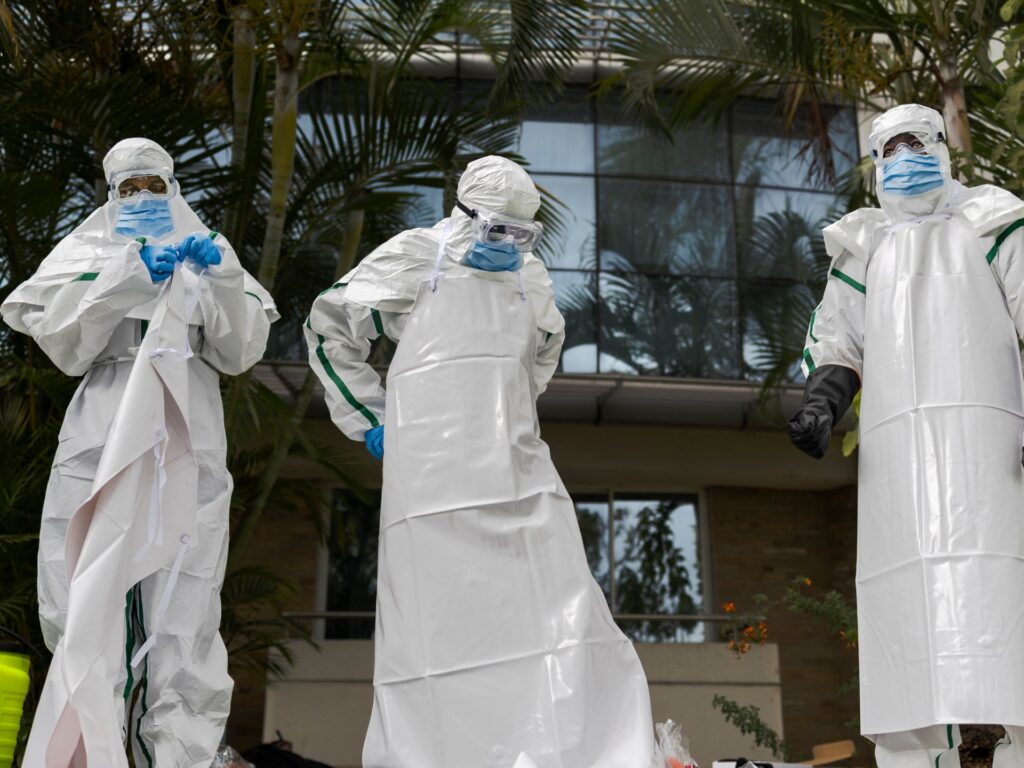
WHO says Ebola outbreak now more complex, affecting three African nations
The World Health Organization warned Thursday that the Ebola outbreak that began in the Democratic Republic of Congo has become more “complex,” with confirmed cases now reported in three African countries. Health officials are still trying to determine how Nigeria’s first case, announced this week, fits into the broader picture, and whether the patient may have crossed paths with Kenya’s initial case at an airport in Uganda.
“We are facing a more complex outbreak landscape,” said Mohamed Janabi, WHO’s regional director for Africa, during an online briefing. Nigeria reported its first case of the Bundibugyo strain on Tuesday, becoming the fourth African nation and the most populous to be affected by the outbreak that was first declared in the DRC in mid‑May. The disease has claimed more than 4,000 lives in the DRC to date.
Kenya, the DRC and Nigeria all have active or recent cases of the Bundibugyo strain, while Uganda, which reported cases earlier in the year, was declared Ebola‑free in August. The Nigerian patient is the Ugandan‑born wife of a Swiss diplomat based in Abuja. Ugandan authorities said she traveled to eastern DRC before transiting through Uganda, but the WHO and Africa’s health agency said they have not received confirmed information confirming a trip to the DRC. A Swiss government statement to Reuters added that she is believed to have contracted the disease while traveling in Uganda.
Wessam Mankoula, head of Emergency Preparedness and Response at the Africa Centres for Disease Control and Prevention (Africa CDC), said both the first Nigerian case and Kenya’s first case left Entebbe on 3 October, and investigators are looking into a possible encounter between the two travelers. Ugandan officials rejected the suggestion that the patient was infected in Uganda, with government spokesman Alan Kasujja calling it “preposterous” to link the country to the case simply because she had visited there.
Mankoula also noted that there is no verified information confirming that the woman traveled to the DRC, a point echoed by Africa CDC director‑general Jean Kaseya. WHO representative in Nigeria Pavel Ursu said the organization’s data did not include any travel outside Uganda, and WHO emergency response manager Patrick Otim said the source of her infection remains unknown as investigators piece together her movements. Otim added that officials are reviewing which health facilities in Abuja she attended between the onset of symptoms and her hospitalization 48 hours later.
Kenya’s Ministry of Health confirmed its first case earlier this month and has reported eight additional infections since then. Health Ministry director‑general Patrick Amoth said all 135 contacts of the first patient have been traced. Nigeria is currently tracing 44 contacts, with more identified recently, though a specific total has not been released.
The outbreak in the DRC is the deadliest in the country’s history, with more than 9,000 confirmed cases and a fatality rate approaching 50 percent, according to local health authorities. Neighboring Uganda recorded 20 confirmed cases, including 15 imported from the DRC, and two deaths before being declared Ebola‑free in August. The Africa CDC has warned of an “extremely serious threat” as the regional death toll climbs.