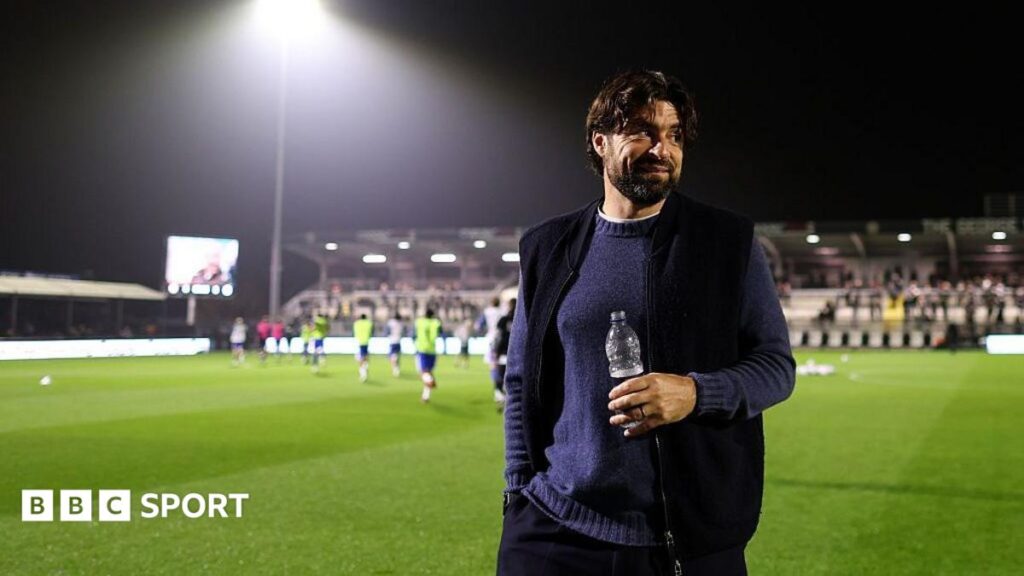
Leicester hit their lowest ebb – but is Martin turning things around?
Leicester City find themselves at one of the darkest moments in the club’s history, sitting 10th in League One after a rapid fall from grace. A decade ago the Foxes were Premier League champions, celebrated worldwide, and five years ago they lifted the FA Cup and were pushing for a Champions League place. Since then, financial woes, points deductions and a drop to the third tier have left the club on the market.
Back‑to‑back victories this week – a 2‑1 win over Doncaster followed by a 4‑0 demolition of Bromley – marked the first consecutive successes since November and hinted at a possible revival after a shaky start to the season. The summer saw a hard reset; after three relegations in four years, the question is whether head coach Russell Martin can steer the Foxes back on course.
Leicester operated under a summer transfer embargo for five weeks, a restriction tied to the EFL’s Salary Cost Management Protocol. An independent Club Financial Review Panel ruled that future Premier League distributions could not be used to boost Leicester’s spending capacity, meaning the club could not sign new players until it generated incoming funds. The embargo delayed the sales of Jeremy Monga and Abdul Fatawu until mid‑July, and only after Monga’s departure to Manchester City on 11 July could the Foxes bring in Conor Chaplin and Alex McCarthy five days later. Four of the starting XI on Tuesday were signed on deadline day, and 66 % of the squad joined after the season began. While some targets walked away, Chaplin, McCarthy and Wes Burns were among those who waited for Martin’s project.
Martin inherited a costly, fractured squad that had lost the trust of supporters and suffered from a complacent dressing‑room culture. In a tighter financial reality the club shed 34 players over the summer and added 16, including several academy graduates and loan signings. Sources tell BBC Sport that the atmosphere at the club has improved markedly.
The £100 million training complex – complete with a herb garden and a golf course – was once seen as a symptom of the club’s excess. Martin has introduced strict behavioural rules: mobile phones are banned in the canteen, and anyone who breaks the rule receives a run‑penalty rather than a fine. Players and staff must sprint the length of the pitch and back in 35 seconds, rest for 35 seconds, and repeat three times; the same routine is imposed for lateness, and Martin and his senior staff lead by example. Earlier in the season, players who left towels and drinks at the pool were shown a photo of the infraction and given the same running punishment.
Behind the scenes, the appointment of James McCarron as sporting director has added stability. McCarron attends most training sessions and works closely with Martin, providing a clear leadership structure. Yet fan frustration remains, especially toward chief football officer Jon Rudkin, who has been with Leicester since 1998. Rudkin’s strained relationship with former chief executive Susan Whelan and his historic silence with the media have drawn criticism. He finally spoke to supporters in a BBC Radio Leicester interview before the loss to Peterborough, a move seen as a sign of the club’s desire to change.
Foxes Trust co‑chair Lynn Wyeth told BBC Sport, “We do have to remember he saw us through the good times as well. He was in when it was all going fantastically, but do we know what he does all day, do we know if it’s all his fault? That’s a good question.” She added, “It’s all very well the fans targeting Russell and Jon but this all goes down to Top (Aiyawatt Srivaddhanaprabha, owner).”
Wyeth continued, “It’s pretty clear that Rudkin has had his time and since the end of last season and it being put up for sale we’ve seen more people coming round to the idea King Power and Top needs to go as well.” The club’s future remains uncertain, but the recent wins and cultural shifts suggest a possible turning point under Martin’s stewardship.