Colombian president orders removal of “communist” exhibits from National Museum
President Abelardo de la Espriella has launched a cultural “counterrevolution” that includes taking down dozens of displays at Bogotá’s National Museum, prompting protests and drawing parallels with former U.S. President Donald Trump. The conservative leader, a known ally of Trump, said last week he wants to stop cultural institutions from being overtaken by what he calls “atheist social communism.”
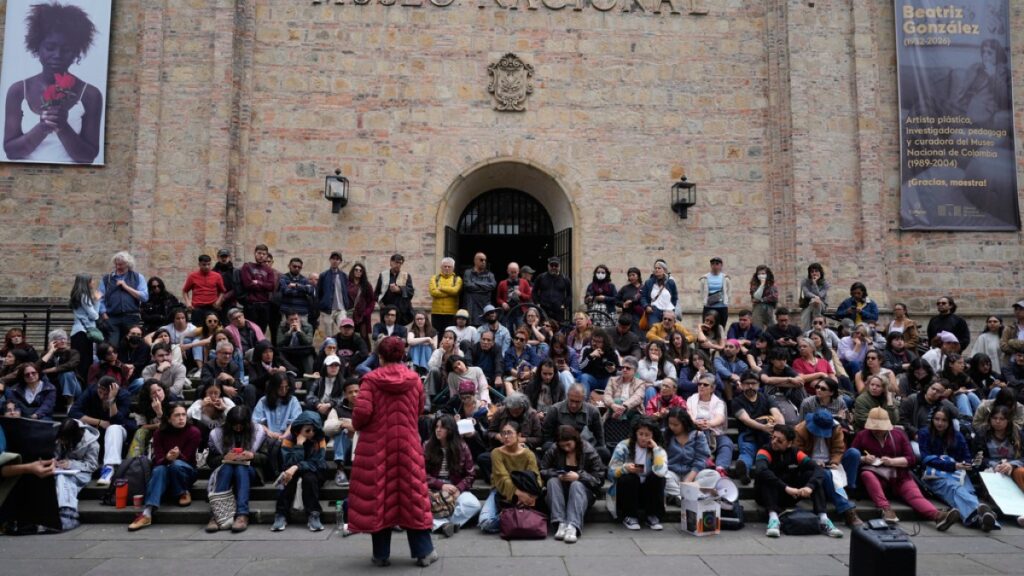
Since the announcement, the museum has stripped away exhibits that documented the country’s social‑movement history, including feminist and LGBTQ activism and the era of political violence. The removals have triggered demonstrations by civil‑rights groups, artists and students, who accuse the administration of censorship and warn that important chapters of Colombia’s past could disappear. Dozens of protesters gathered on Wednesday outside the museum, where riot police stood guard at the entrance.
“I find it outrageous that they want to erase part of our history,” said Azul Riascos, a history student. He added that the government is trying to portray Colombia as uniformly white, Catholic and Spanish‑speaking, a narrative that marginalizes Black, Indigenous and LGBTQ communities.
Gimena Sanchez‑Garzoli, director for the Andes at the Washington Office on Latin America, said the move reflects a broader trend among Trump‑aligned leaders who are adopting U.S. political narratives and tactics. Trump has repeatedly attacked museums in Washington, especially those linked to the Smithsonian Institution. In July, the White House released a report labeling leaders of the Smithsonian’s National Museum of American History as radical activists and ordered signage to be placed outside the museum warning visitors that some exhibits were inaccurate. Those signs have yet to appear, and museum director Anthea Hartig told Congress that the report “does not fairly or accurately characterize the full body of work at the museum.”
Sanchez‑Garzoli noted that the United States’ cooperation with allied Latin American governments on security and counternarcotics also carries an ideological component. Anthropologist Arturo Sanabria described the Colombian government’s actions during the protest as a form of neocolonial intervention, saying they import narratives about terrorism and “woke” culture.
Culture Minister Paola Holguín said the administration is reviewing and redesigning exhibitions and curatorial practices at other museums under her ministry’s jurisdiction. The Ministry of Foreign Affairs also renamed a courtyard that had honored an Indigenous leader, describing the change as part of the president’s campaign against “woke” ideology.
Political scientist Estefanía Cardozo, speaking outside the museum, argued that the government is creating a cultural battle that “probably doesn’t exist,” adding that it invents a threat to erase identities that already endure.