Musk promises $10 billion in SpaceX stock for every U.S. child: who benefits?
Elon Musk announced on X that he will give one SpaceX share to each child in the United States next year, a donation that could be worth more than $10 billion. The pledge, made on Monday, was described by Musk as “the first of many.” According to U.S. Census Bureau figures, roughly 73 million Americans are under 18.
At the market close on Friday, SpaceX shares were priced at $146.03, putting the total value of the giveaway at about $10.7 billion. President Donald Trump praised the gesture on his Truth Social platform and said the shares would be distributed through “TRUMP ACCOUNTS,” tax‑advantaged investment accounts for minors created under his administration’s tax and spending legislation last year. The announcement arrives just two weeks before the November 3 midterm elections.
Musk is the largest known donor in the run‑up to the elections, having contributed more than $276 million to Republican groups since July. He has not specified which children will be eligible, when the shares will be transferred, or how the process will work.
SpaceX, the world’s seventh‑largest company, began trading on the Nasdaq in June at an IPO price of $135 per share. Since then the stock has been volatile, falling 35.3 percent from its peak. The current price of about $146 means that each $1 change in the share price alters the total gift’s value by roughly $73 million.
SEC filings from August show that Musk directly holds 4.8 billion SpaceX shares. Including unvested awards and stock options, his stake rises to about 6.4 billion shares, or 48.4 percent of the company. Giving away 73 million shares would reduce his outright holding by roughly 1.5 percent, barely affecting his control. Because SpaceX has two share classes, Musk’s voting power—currently around 82 percent—would dip by only 0.1 percentage point, according to Bloomberg Opinion.
The mechanics of delivering the shares remain unclear. Trump said the stock would sit in Trump accounts, and Musk thanked Brad Gerstner, the tech investor behind the accounts, for “helping enable this.” The White House reports that nearly 70 million Trump accounts have been opened, one for every child with a Social Security number. Investments in these accounts can grow tax‑deferred until the child turns 18, or be rolled into a tax‑friendly IRA thereafter.
New Treasury rules issued on September 30 allow donors to give individual company stock to children through these accounts. Regular contributions to a child’s Trump account must be in low‑risk index funds. Parents cannot decline the shares on behalf of their children and generally cannot sell them for five years, or until the end of the year the child turns 17, whichever comes first. Musk himself cannot sell or trade most of his SpaceX shares until June 2027, according to the Wall Street Journal.
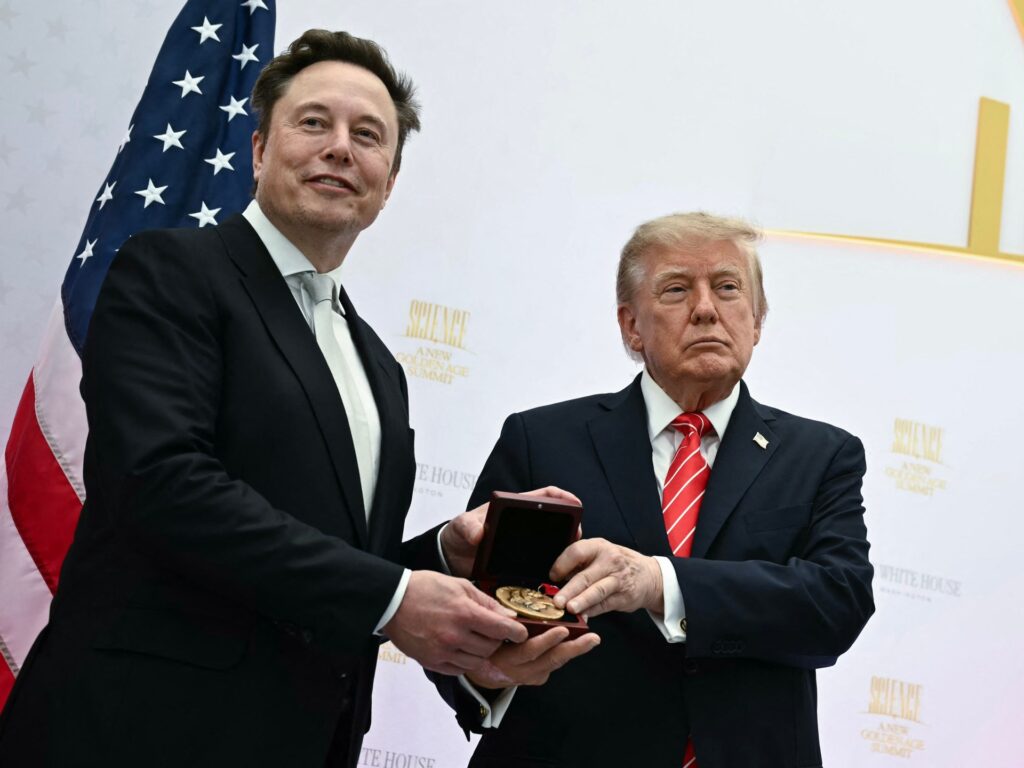
The political payoff appears significant. Trump thanked Musk on Truth Social, saying the pledge was “exactly what was envisioned when we created TRUMP ACCOUNTS.” The White House has highlighted the accounts as a hallmark of Trump’s tax law, noting that every Democrat voted against the legislation. The gift also signals a public reconciliation after a 2025 dispute between Musk and Trump over the same tax bill, which Trump later dismissed as a “little dispute.”
While children receive a free share, Musk stands to save money. Donors who give appreciated stock to charity avoid capital‑gains tax and can claim a deduction, CNBC reported. Because Musk paid little for his SpaceX holdings, selling $10.7 billion of stock could generate a tax bill of up to $2.5 billion. Will McBride, chief economist at the Tax Foundation, said this is a common strategy for high‑income taxpayers facing high rates. Ann Lipton, a law professor at the University of Colorado Boulder, told Inc. magazine that shareholders who cannot sell also have a vested interest in SpaceX’s success and in minimizing regulatory burdens.
Economist Mitchell Downey of Stockholm University’s Institute for International Economic Studies noted the pledge illustrates a “horseshoe” effect, where right‑wing and left‑wing policies converge. For decades, progressives have championed Child Development Accounts—investment accounts for every newborn intended to reduce wealth inequality—though they never secured federal backing. Musk’s donation and the Trump accounts could bring the concept closer to the mainstream. “It always felt like it might be out of reach,” Downey said, “but I don’t see how Musk’s proposal would be possible without building some infrastructure like this.”
The timing is noteworthy. The pledge arrives just before the midterm elections that will determine control of both chambers of Congress, with all House seats and one‑third of the Senate up for election. The move adds a high‑profile, child‑focused initiative to the political landscape in the final weeks of the campaign.