
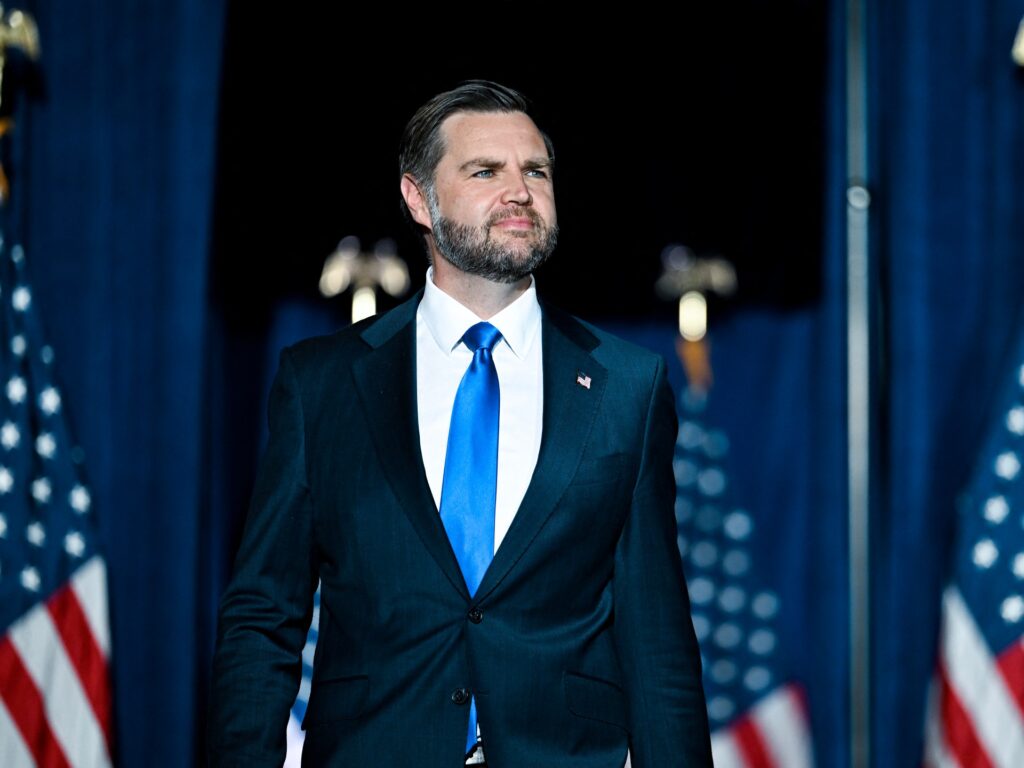
US Vice President JD Vance refuses to back Netanyahu, says he’ll stay focused on U.S. midterms
Vice President JD Vance told journalist Mark Halperin on Monday that he will not endorse Israeli Prime Minister Benjamin Netanyahu in the upcoming Israeli elections, preferring to remain on the sidelines and concentrate on the American midterm races.
“I’m not anti‑endorsing him. I’m not pro‑endorsing him. I’m not getting involved in Israeli elections,” Vance said. “I endorse American candidates and that’s where I’m focused on is the midterms.”
His remarks came a day after President Donald Trump publicly threw his support behind Netanyahu.
Vance’s last foray into foreign‑leader endorsements was in April, when he backed Hungary’s former right‑wing prime minister Viktor Orbán, who was soundly defeated by Peter Magyar.
During his two terms, Trump forged a close bond with Netanyahu and his right‑wing government. In his first term, Trump moved the U.S. embassy to West Jerusalem, recognized Israel’s annexation of the Golan Heights, withdrew from the 2015 Iran nuclear accord, and promoted a series of normalization deals with Arab states that largely sidestepped the Israel‑Palestine issue. Since returning to office in January 2025, the Trump administration has continued to supply weapons to Israel despite the ongoing war in Gaza, entered a broader conflict with Iran, and intensified pressure on the International Criminal Court.
Vance, widely viewed as a potential 2028 presidential contender, has become a symbol of growing unease within the Republican Party over Washington’s unconditional backing of Israel. That frustration has deepened as the U.S.–Israel war with Iran has raised costs for American consumers. While he maintains that U.S. support for Israel should persist, Vance has faced skepticism from Jewish Republicans about the depth of his commitment to the alliance.
In June, amid Israeli opposition to an Iran cease‑fire proposal, Vance warned Israel, “You can’t just kill your way out of solving every single national security problem that you have.” He also cautioned Netanyahu’s cabinet against alienating Trump, calling the president “the only powerful ally” Israel has left.
It remains uncertain whether Trump’s endorsement will lift Netanyahu’s Likud party ahead of the October 27 vote. Some polls suggest Israeli voters are wary of the U.S. president, especially after his perceived attempts to curb Israeli actions in Lebanon and limit further escalation with Iran.
Current polling shows the Yashar party ahead of Likud, with former Israeli military chief of staff Gadi Eisenkot, leader of Yashar, indicating he will try to assemble an opposition bloc capable of forming a government.