
Sheer to Structured: Are GLP‑1 Medications Influencing Fashion Trends?
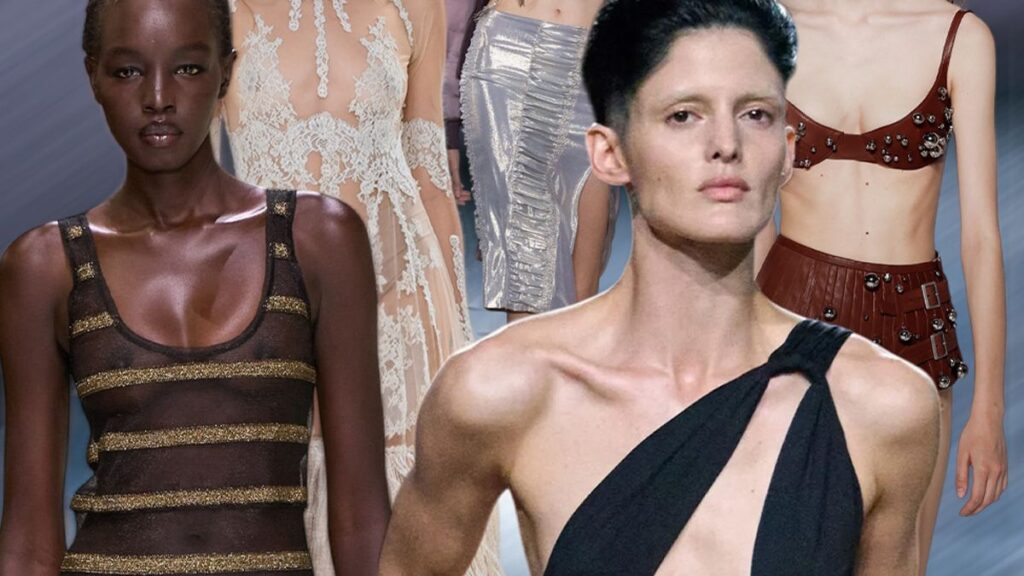
Bullet bras and high‑cut briefs appeared on the Tom Ford runway, while Balmain showcased corsets and garter skirts. Ashlyn turned skirts into belts, and sheer organza drifted across many Spring/Summer 2027 collections. These lingerie‑inspired, transparent or cinched pieces dominate the season, but they also highlight a deeper issue: the link between weight‑loss drugs known as GLP‑1s and what appears on the catwalk.
GLP‑1 medications have become a pervasive topic. Morgan Stanley Research reported sales of $79 billion in 2025, and the market is expected to reach $190 billion by 2035. A June 2026 study by the Consumer Goods Forum and Bain & Co. predicts that by 2030 one in three Americans and one in eight Britons will be using GLP‑1s.
Against this backdrop, the surge of “naked dressing,” bralettes and body‑contouring designs invites speculation about cause and effect. Are luxury shoppers displaying newly altered bodies, or is the coincidence simply more visible now?
Paris‑based fashion sourcer and luxury personal shopper Isabel Bazzani says client measurements are shifting. “Couture houses have told me they’ve had to update client books they’ve held for years, because the body measurements on file no longer match,” she explains. “Production is following suit, with larger sizes from luxury houses becoming more limited and smaller sizes being made in higher quantities.”
Frida Tordhag, a fashion analyst at Heuritech, notes that fashion mirrors cultural changes, body ideals and attitudes toward dress. “It’s hard to generalize it. These body trends have always gone in waves, and we have seen more that women are using GLP‑1s, so they might dress differently,” she says. Tordhag adds that, from her perspective and the data available, a direct correlation between GLP‑1 use and runway styles cannot be confirmed.
Krista Corrigan, senior retail analyst at EDITED, agrees that the link is complex. “We’re still going through all the trends and trying to decode how this is playing out,” she says, acknowledging the difficulty of tying specific looks to medication use. Nonetheless, Corrigan sees hints of influence, noting that “we definitely saw a couple of things that indicate to me the influence of GLP‑1 and Ozempic showing up on the runway.”
One manifestation of the shift lies in functional design. Laura Yiannakou, women’s wear senior strategist at WGSN, points out that while headlines focus on skin‑bare fashion, the real change is in garment performance. “Around 40 percent of consumers who use weight‑loss medications prioritize comfort, as they navigate drug‑induced side effects like temperature shifts, skin sensitivity, and extreme bloating,” she says.
Design details that allow adjustment have become prominent: crossed lacing at Miu Miu, zippers on Lemaire skirts and elastic hems at CFCL. Belts, once purely decorative, now serve as tools for instant, customizable shaping. This trend appeared on the runway with oversized belts at Celine, cinched peplum waists at Valentino and dramatic trench‑coat fastenings at Acne Studios.
Corrigan identifies belts and cinched‑waist outerwear as Spring/Summer 2027 trends that accommodate size fluctuation while emphasizing slimmer silhouettes. Retail data supports the demand for flexibility: arrivals of bottoms with adjustable waistbands more than doubled month‑on‑month in May 2026, and belted bottoms rose 50 percent year‑on‑year, according to EDITED. Runway examples include self‑tie fabric belts on Max Mara wide‑leg pants and Velcro fastenings securing Prada skirts.
Breathable, easy‑moving fabrics are also gaining traction. Yiannakou describes a move toward “rebound” textiles and fluid silhouettes, evident in tempo pleats at Issey Miyake and wave‑inspired shapes at Stella McCartney. Designers are turning to high‑recovery knits such as Milano rib, bi‑stretch wool blends and heat‑set pleats that provide structure while offering give and snap‑back quality.
Silhouette choices reflect the same priorities. Column dresses flowed on the Alberta Ferretti runway, cutouts appeared on Christopher Esber, and elongated designs featured at Fendi. Ferragamo’s closing look, worn by Anok Yai, combined a high‑neck silhouette with black and metallic paillettes. WGSN retail data shows the column silhouette’s share of the dress market has nearly doubled, indicating a preference for shapes that sit comfortably on the body.
Tordhag also notes a surge in voluminous styles. “Everything from sorrel pants to drape dresses, fringe dresses and feathers are up,” she observes, underscoring the broader appetite for garments that move with changing body proportions.