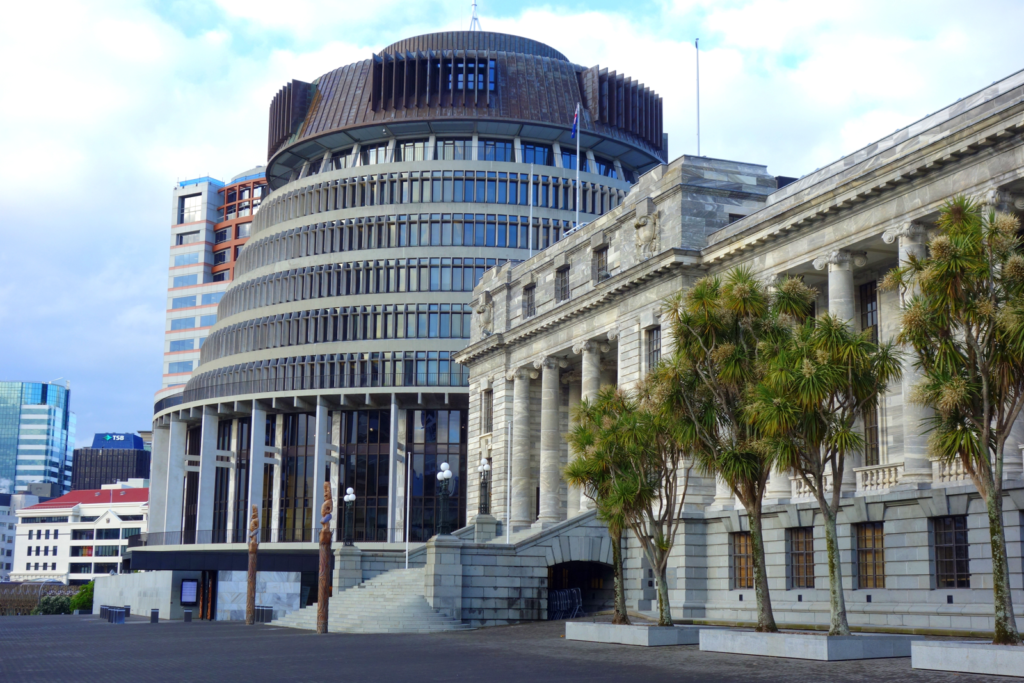
New Zealand Election Ends in Deadlock as a Centrist Newcomer Holds the Keys to Power
New Zealand’s election has ended in a hung parliament. The final count, published on Friday, wiped out the governing coalition’s wafer-thin majority and handed the balance of power to a centrist party that had never before won a seat in parliament. Prime Minister Christopher Luxon now has only one viable path to a second term, and it runs through a 38-year-old political newcomer whose party has set five firm conditions for its support.
How a Wafer-Thin Majority Vanished
The election on November 7 was the tightest in years. On election night, the conservative bloc appeared to hold a narrow majority. But the final count included about 485,000 special votes, cast by New Zealanders living abroad or outside their home electorates, and they changed the result. National, Luxon’s party, lost two seats and finished with 40. Together with its traditional partners, the libertarian ACT party with 13 seats and the populist New Zealand First with 12, the right-wing bloc holds 65 seats in a 130-seat parliament, exactly one short of the 66 needed for a majority. The left-wing opposition, led by Labour’s Chris Hipkins, won 58 seats, with Labour itself on 36, the Greens on 17 and Te Pati Maori, an Indigenous rights party, on five. The seat totals tell only part of the story. Both National and Labour won less than 30 percent of the party vote, National on 28.35 percent and Labour on 29.88 percent, a sign of voters’ frustration over the high cost of living and their lack of enthusiasm for either leader, analysts said.
The Kingmaker With Five Bottom Lines
The decisive seats belong to the Opportunity Party, a centrist group that won seven seats in its first success after three failed attempts to enter parliament. Its leader, Qiulae Wong, a business consultant who took charge less than a year ago, has said she could work with either side, and on Friday she said she would negotiate with National as the largest party. She said her voters were drawn by a promise of evidence-based centrism and an end to partisan bickering, a message that amounted to a rebuke of the major parties that have long dominated New Zealand politics. But her support comes with conditions. Opportunity has set five bottom lines, including stronger measures on climate change and an end to bottom-trawling fisheries, positions that clash directly with the stances of ACT and New Zealand First. Wong has also said she would not join a government in which New Zealand First leader Winston Peters served as foreign minister, a role he held until the election.
A Difficult Negotiation Ahead
Luxon said on Friday that he was confident he could form a government with Opportunity and his traditional partners, but he did not explain how he would square their differences. Endorsement from all three would be necessary to return his National party for a second term. He warned that the country could face a long wait. “These negotiations may be challenging and they could take some time,” he said. “But getting it right matters far more than getting it done quickly.” Wong said her party would consider either a formal coalition deal or a confidence and supply agreement, under which its lawmakers would back key government legislation and judge other bills case by case. None of Opportunity’s incoming members has served in parliament before, which adds to the uncertainty of the talks.
What Happens If No Deal Is Reached
The arithmetic leaves Labour with no realistic path to power. Even with Opportunity’s seven seats, the left-wing bloc would still fall short of a majority, a point Hipkins effectively conceded on Friday. If no government can be formed, New Zealand could face a fresh election, a rare outcome in a country that normally votes every three years. The existing government will remain in a caretaker role while talks continue. For now, the country waits on seven newcomers and the five conditions they have set.
Sources: 1News and Reuters (Associated Press reporting also consulted)