Taiwan Votes in Local Elections That Will Shape the Road to 2028 as China Watches Closely
Voters across Taiwan headed to the polls on Saturday to choose mayors and county chiefs in all 22 of the island’s cities and counties, in an election that will be read as a first verdict on the country’s politics ahead of the presidential vote in early 2028. The campaigns were fought mostly on local questions such as transport and the environment, yet the result will be watched far beyond Taiwan’s shores, nowhere more closely than in Beijing.
A Local Vote With National Stakes
Local elections in Taiwan rarely decide foreign policy, and this one is no exception. The winners will run cities and counties, not cross-strait relations. But the vote is the first island-wide test of party strength since President Lai Ching-te took office, and both major parties have treated it as a rehearsal for 2028. Four years ago, the opposition Kuomintang, or KMT, won 14 of the 22 races to the governing Democratic Progressive Party’s five, with other parties and independents taking the remaining three. The DPP will want to show it has recovered ground, and the KMT will want to prove its last victory was not a one-off. Polls closed at 4 p.m. local time, with results expected in the early evening. The manoeuvring for the 2028 presidential and parliamentary elections will begin in earnest once the count is known.
Taipei Takes Centre Stage
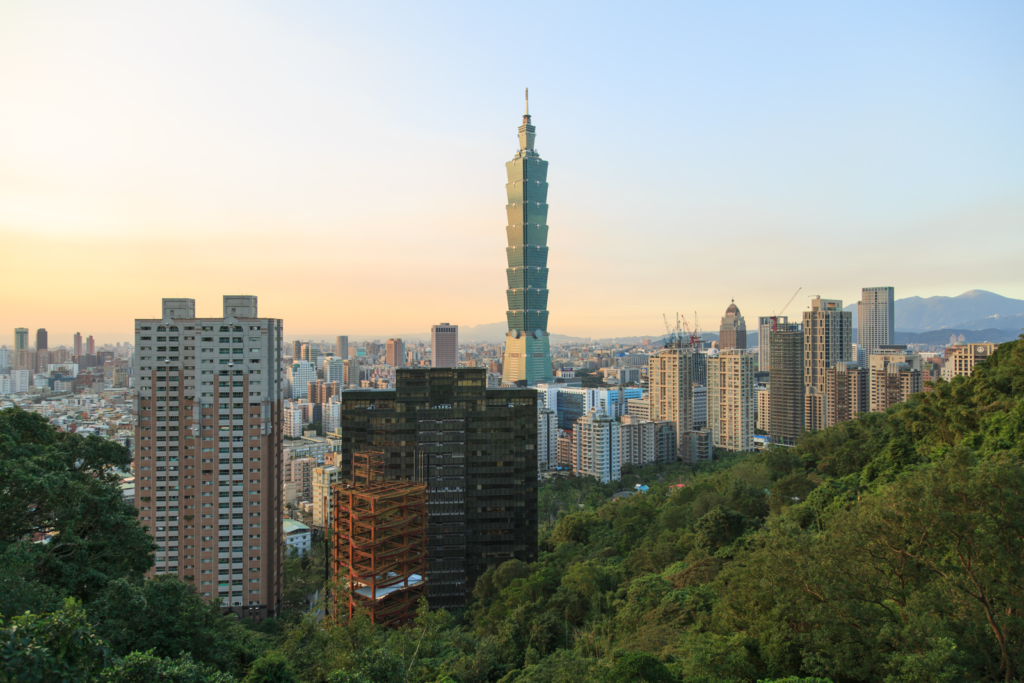
Both parties concentrated their efforts on Taipei and the five other biggest cities, and the race to watch is the contest for mayor of the capital. The incumbent, Chiang Wan-an of the KMT, has faced a stiff challenge from Puma Shen of the DPP, an academic turned lawmaker who has built his reputation as an expert on China’s information warfare. Two other races carry similar weight: New Taipei, the island’s most populous city, is held by the KMT, while Kaohsiung in the south is a traditional DPP stronghold where the KMT has campaigned hard. Together, the three cities will tell the story of the night: whether the DPP can break through in the north, and whether the KMT can make inroads in the south.
Beijing’s Shadow Over the Ballot
China did not feature as a major campaign issue, yet Beijing repeatedly weighed in. China claims Taiwan as its own territory, a claim Taipei rejects, and it has stepped up pressure on the island to accept its sovereignty claims. In the run-up to the vote, Beijing denounced Shen, the DPP’s candidate in Taipei, and Chinese police have listed him as wanted for separatism. Shen has said the police never contacted him, and that whoever wins the Taipei race, the election itself would be a victory for democracy in the face of pressure from China. The pressure was not only rhetorical. Taiwan’s Defence Ministry said on Friday it had detected 30 Chinese military aircraft operating around the island, 26 of which crossed the median line of the Taiwan Strait during what Beijing called a joint combat readiness patrol with warships. A day earlier, China’s Defence Ministry said reunification was an unstoppable trend and that Taiwan’s people could feel safer with what it called a heroic people’s army to protect them.
What Comes Next
The result will shape the field for 2028. President Lai will almost certainly stand for a second term, the maximum allowed under the constitution, while the KMT has yet to confirm its candidate. Its likely frontrunner is Lu Shiow-yen, the former journalist who is mayor of the central city of Taichung. The KMT traditionally favours closer ties with Beijing, whose government refuses to talk to Lai and labels him a separatist. Lai says only Taiwan’s people can decide their future. Saturday’s vote will not settle that argument. It will show, though, which party enters the long road to 2028 with the wind behind it.
Sources: Reuters