Pakistan Lifts Wheat Import Cap to 2.5 Million Tonnes as Flour Prices Jump 54%
The government has raised Pakistan’s wheat import ceiling by 150 percent to 2.5 million tonnes, a late-night decision that admits what shoppers already knew: flour has become too expensive, too fast. The Economic Coordination Committee, chaired by Finance Minister Muhammad Aurangzeb, approved the increase in principle on Friday, 27 November 2026, lifting the cap from one million tonnes for Food Year 2026-27. The decision now goes to the federal cabinet for ratification.
Why flour got so expensive
The numbers behind the decision are stark. The Pakistan Bureau of Statistics reported on Friday that wheat flour now averages Rs164 per kilogram, up Rs57 or 54 percent, while wheat prices rose 5.6 percent in a single week. In the open market, wheat trades between Rs7,500 and Rs8,500 per 40 kilograms, against an indicative official rate of Rs4,000 to Rs4,200. Short-term inflation hit 9.49 percent year on year in the week ending 26 November, driven largely by wheat flour. For a household that buys a 20 kilogram bag of flour, the increase is not a statistic. It is the difference between a manageable weekly shop and a painful one.

What the ECC actually approved
The ceiling is a limit, not an order. The provinces have reassessed their import needs at about 1.7 million tonnes, with Punjab asking for 950,000 tonnes, Sindh 450,000 tonnes subject to confirmation, and Khyber Pakhtunkhwa 300,000 tonnes, while Balochistan will be supplied from existing PASSCO stocks. That means tenders will be needed for roughly 1.95 million tonnes of additional imports. The ECC set the ceiling higher than the current demand on purpose, so that further shortfalls can be met without another round of approvals. The full cost of the imported wheat, from procurement and freight to port charges, taxes and duties, will be borne by the provincial governments.
The five-month delay and the stocks problem
The decision comes after a five-month delay that the Express Tribune says contributed directly to the 54 percent spike in flour prices. Officials disclosed during the week that some public wheat stocks were unfit for consumption, a fact first raised in a meeting chaired by Deputy Prime Minister Ishaq Dar on Thursday and repeated at the ECC on Friday. That disclosure sits awkwardly beside the official claim of 29.7 million tonnes of production plus two million tonnes of stocks. If the harvest was that large, the shortage should not have happened. The gap between the claimed supply and the market price is the question the government has not yet answered, and it is the reason imports, rather than releases from public stocks, are now the chosen fix.
What happens next
Three things will decide whether the move works. First, the cabinet must ratify the decision quickly, and tenders must follow without the delays that marked the last five months. Second, the imported wheat must actually reach the market at prices that pull flour down, rather than sitting in godowns while retail rates stay high. Third, the government must explain the state of its own stocks, because a country that does not know how much usable wheat it holds cannot plan the next harvest either. The prime minister has already set the indicative wheat support price for 2027 at Rs4,500 per maund, up Rs1,000 from last year, a signal to farmers that growing wheat should pay. Whether that signal and the imports together steady the price of roti will be clear in the coming weeks, in the market and at the kitchen table.
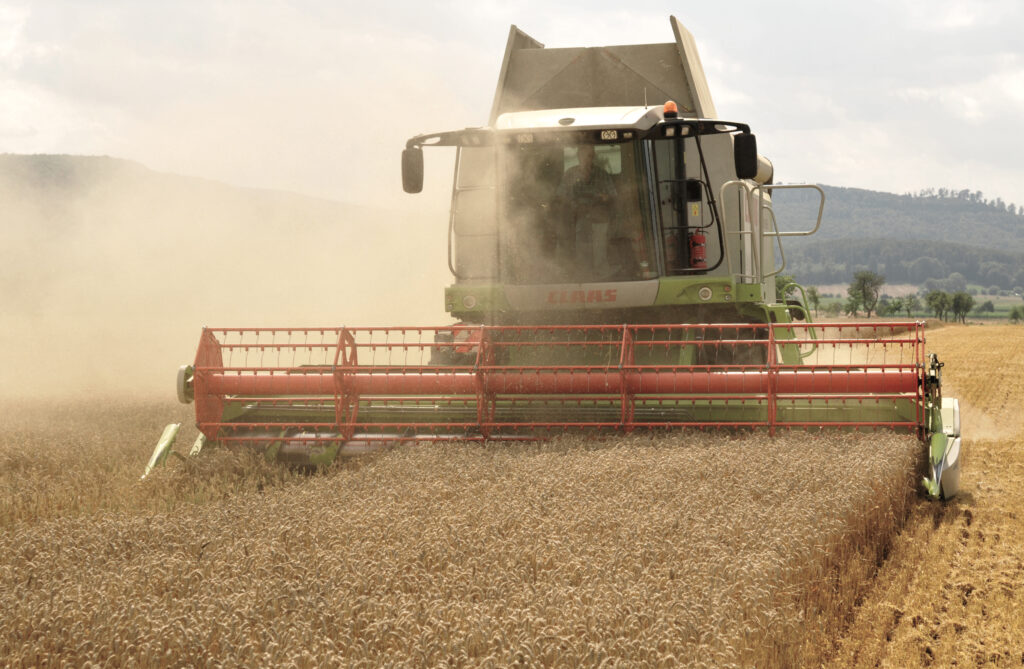
Photo: A combine harvester working a wheat field. Credit: Michael Gäbler, via Wikimedia Commons (CC BY-SA 3.0).
Sources: Dawn, The Express Tribune, ProPakistani, Radio Pakistan.