Why Pakistan Stores So Little of Its River Water: Dams, Silt and the 30-Day Trap
Every monsoon, Pakistan’s rivers carry huge volumes of water down to the sea. Months later, farmers wait for canal water that does not come, cities ration supply, and hydropower plants run below capacity. Both problems have the same cause: Pakistan stores almost none of the water that flows through it. The country’s dams hold roughly 30 days of the water it uses, against a 120-day minimum. India can store about 220 days of water. Egypt, on the Nile, can store 1,000. The cause is silt, farming, groundwater, and decades of delay.
The 30-day number, explained
Pakistan’s three large reservoirs, Tarbela, Mangla and Chashma, were designed to hold about 16 million acre feet of live storage. Today they hold about 13.7 million acre feet. The Indus system delivers around 143 million acre feet a year, nearly all of it used. Storage under a tenth of annual flow leaves almost no buffer. When the monsoon is late, there is nothing in reserve. When it is heavy, the water has nowhere to go. The same shortage produces both drought and flood.
The human scale is visible in per-person numbers. In 1951, Pakistan had about 5,260 cubic metres of renewable water per person per year. Today the figure is below 860 cubic metres, under the United Nations’ 1,000-cubic-metre line for absolute water scarcity. The International Monetary Fund put total water availability at 191 million acre feet against demand of 274 million acre feet, a shortfall of about 30 percent.
Why the storage keeps shrinking
Pakistan has not only failed to add storage. It is losing the storage it already has. The Indus and Jhelum carry heavy silt from the mountains, which settles in the reservoirs year after year. Tarbela, completed in 1976, has lost roughly a third of its live storage. Mangla, completed in 1967 and raised in 2009, has lost about a fifth. Across the three reservoirs, sedimentation has eaten away more than 2.5 million acre feet since the 1970s.
Silt is not a surprise: every dam on a silt-heavy river loses capacity over time. The failure was not replacing the lost storage. Since Tarbela’s completion in the 1970s, Pakistan has added no large new storage dam, and that gap is why the country stores 30 days of water instead of 120.
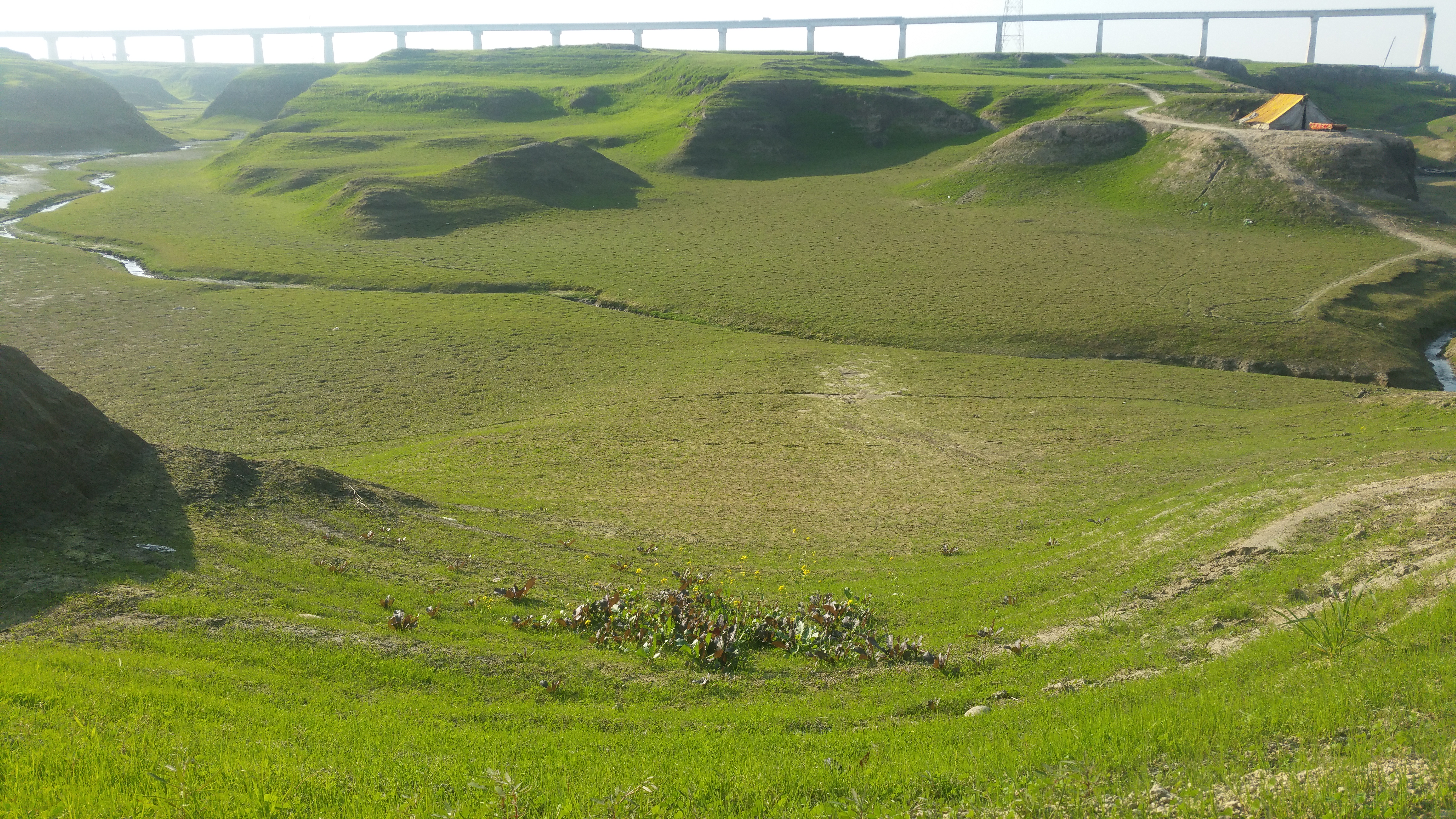
Mangla Dam reservoir at low water. Photo: Aqib0315 / CC BY-SA 4.0
The water goes to farms first
Agriculture takes more than 90 percent of Pakistan’s water. The Indus Basin Irrigation System, the largest contiguous gravity-fed canal network in the world, feeds the wheat, rice, cotton and sugarcane that employ a large share of the workforce.
The system is also wasteful. Much canal water never reaches a field: it seeps out of unlined canals or evaporates on the way. Flood irrigation, still the standard method on many farms, uses far more water than drip or sprinkler systems. Rice and sugarcane are thirsty crops grown in a country running out of water, both backed by policy. Until farms use less water per tonne of crop, no amount of new storage will close the gap on its own.
The groundwater backup is running out too
When canal water runs short, farmers turn to tube wells. The number of tube wells in Pakistan rose from about 659,000 in 2000-01 to about 1.18 million by 2012-13, and it has kept growing since. Groundwater now supplies a large part of irrigation in Punjab, the country’s breadbasket.
But groundwater is a savings account being drawn down faster than it is refilled. In parts of Punjab the water table falls by about three feet every year. Deeper wells cost more to pump, and in some areas the water turns brackish. A country that mines its groundwater to make up for missing surface storage is borrowing against its future harvests.
The dams now being built
The pipeline of projects under construction is the largest in decades. Diamer-Bhasha Dam, on the Indus about 40 kilometres downstream of Chilas, is designed for 8.1 million acre feet of gross storage and 4,500 megawatts of power. Mohmand Dam, on the Swat River, is designed for about 1.2 million acre feet and 800 megawatts. With smaller projects, WAPDA’s programme is meant to add about 11.7 million acre feet of gross storage.
The catch is time. Diamer-Bhasha was once scheduled for completion around 2028-29. Its completion has been revised to around 2030, with physical progress reported below 20 percent in 2025. Mohmand has slipped to 2027. Even if every project in the pipeline is finished, total storage would rise to only about 45 days of use, still far below the 120-day benchmark. New dams are necessary, but they are not sufficient on their own.
What would actually fix it
Storage is one leg of the answer. The other legs are less photogenic but cheaper and faster. Lining canals and fixing leaks would recover water that is already in the system. Shifting from flood irrigation to drip and sprinkler methods would cut farm demand sharply. Pricing water closer to its real cost would change what farmers grow. Protecting groundwater with metering and managed recharge would stop the water table’s decline.
The arithmetic is unforgiving. Demand already exceeds supply by about 30 percent, per-person availability has fallen below the scarcity line, and storage covers a single month. Pakistan cannot dam its way out of the crisis in one project. It has to store more, waste less, and farm differently, all at the same time.
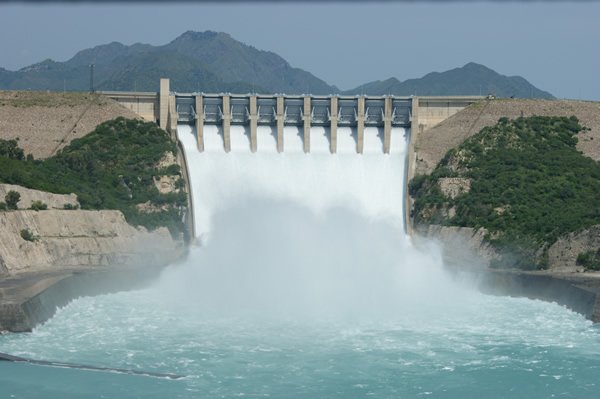
Featured photo: Tarbela Dam, Khyber Pakhtunkhwa. Photo: USAID, public domain.