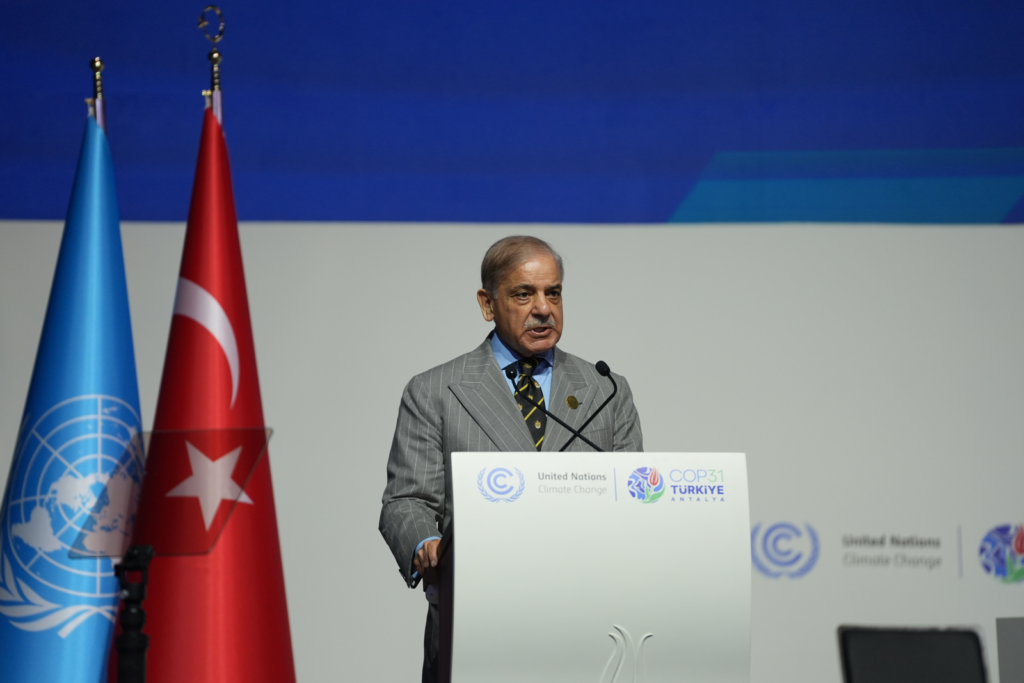
Shehbaz Sharif Steps In as Cabinet Row Over New Provinces Turns Public
Prime Minister Shehbaz Sharif has stepped in to stop a public row inside his own cabinet, directing federal ministers to end their statements against one another and settle their differences through consultation. The intervention came after the dispute over new provinces spilled from closed rooms into open criticism between two of his own ministers.
The row that forced the intervention
The clash is between Interior Minister Mohsin Naqvi and Rana Sanaullah, the prime minister’s adviser on political affairs. Sanaullah publicly accused Naqvi of complicating the issue of new provinces by making what he called an irrelevant speech at an irrelevant forum, a reference to Naqvi’s address at the Pakistan Economic Summit in July, where he called for a system reset and opened the debate on new administrative units. Naqvi has hit back at the repeated criticism, and the exchange has played out in public for days. The prime minister’s direction on Tuesday was blunt in its intent: ministers should resolve differences through consensus and stop airing them in public. He also urged representatives of provincial governments to exercise restraint.
The referendum question behind the row
The argument is not only about tone. At its centre is a proposal for a referendum on creating new provinces, an idea that has divided the ruling coalition. The PPP, which supports the government from outside the cabinet, strongly opposes any move to divide Sindh through a referendum. Its chairman Bilawal Bhutto-Zardari has rejected the idea outright, and senior PPP leader Raza Rabbani has argued that the Constitution’s Article 239(4) rules out the referendum route. The PML-N and MQM-P, by contrast, argue that smaller administrative units would improve governance. The disagreement has already produced a series of public exchanges, including a warning from Naqvi to an unnamed cabinet colleague earlier this week, and it now sits at the heart of the coalition’s most sensitive argument.
Why the prime minister had to step in
A week ago, President Asif Ali Zardari and the prime minister agreed that coalition disputes would be settled through dialogue, not public statements. The Naqvi-Sanaullah exchange showed that agreement was not holding. For Shehbaz Sharif, the stakes go beyond embarrassment. A cabinet that argues in public about the country’s constitutional structure weakens the government’s authority at a moment when it is also managing an IMF programme, a security challenge in Khyber Pakhtunkhwa and strained relations with the opposition. By intervening directly, the prime minister has put his own authority behind a ceasefire. The question is whether the ministers obey it.
What happens next
The test will come quickly. If the public statements stop and the referendum proposal is either taken up through proper consultation or quietly shelved, the intervention will have worked. If the argument resumes, the prime minister will have to choose between enforcing discipline on his own cabinet and letting the coalition’s most divisive question keep playing out in public. Either way, the new provinces debate itself is not settled. It has moved from a speech at an economic summit to the centre of national politics, and it will return the next time a coalition partner feels it was not consulted.
Sources: Dawn