
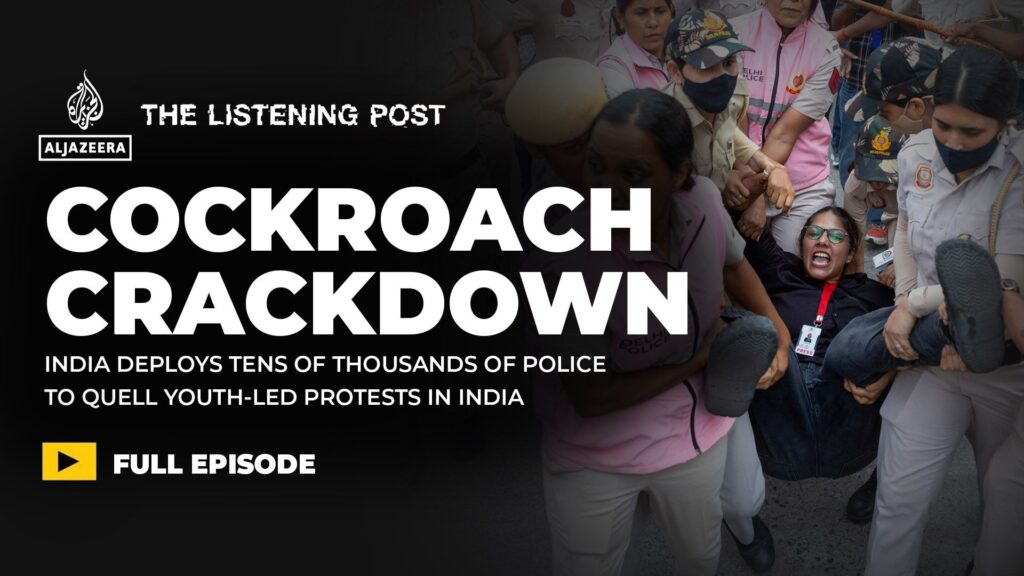
India tightens grip on protesters, journalists and surveillance
A fresh wave of youth‑led demonstrations has surged onto the streets of Delhi after reports surfaced that the Election Commission struck roughly 130 million names from voter rolls. Unlike the violent unrest that erupted in July, these new protests are marked by a different tactic: assaults on the media. Dozens of reporters and online creators have been detained, attacked or barred from doing their work, yet the government’s effort to silence critical voices is meeting resistance from a younger generation determined to hold power to account.
Contributors to this report include author and journalist Saba Naqvi, multimedia journalist Smita Sharma, Strike Originals founder Shyam Meera Singh, and Yale University lecturer Sushant Singh.
On the broader South Asian scene, Pakistan has imposed a state of emergency in its north‑western Khyber Pakhtunkhwa province following protests demanding the release of former prime minister Imran Khan. The authorities responded with a media blackout and an internet shutdown, while portraying the demonstrators as insurgents.
In Brazil, the political movement sparked by former president Jair Bolsonaro continues to evolve three years after his defeat. With no clear leader, a new cohort of young evangelical influencers has stepped into the void, leveraging a long‑standing religious media network to expand their reach. Their viral videos circulate widely on social platforms, energising followers and shaping voter sentiment in ways that traditional politicians struggle to match. Nicholas Muirhead of The Listening Post reports on these evangelical digital figures and the political space they are carving out.
The piece features insights from journalist Anna Virginia Balloussier of Folha De São Paulo, Caro Evangelista, executive director of Iser, and Magali Cunha, editor‑in‑chief of the Berreia Project.