
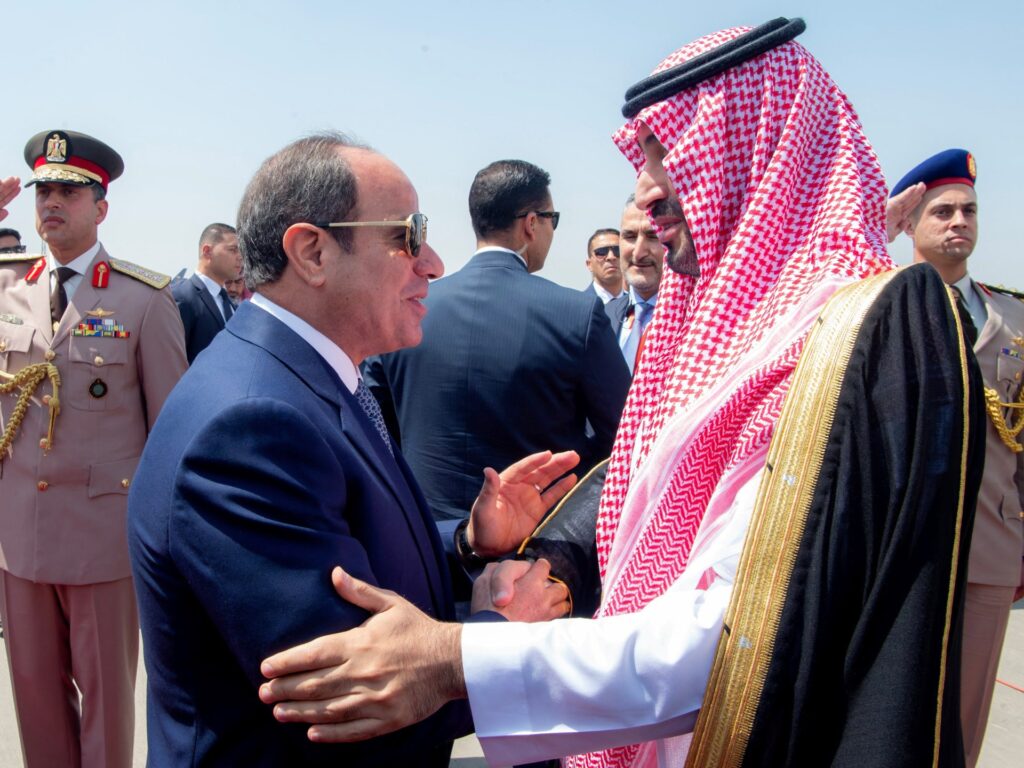
Egypt readies possible military aid for Saudi Arabia in fight against Houthis
Egypt’s parliament is set to meet on Sunday after President Abdel Fattah el‑Sisi called an emergency session to consider authorising defensive military assistance to Saudi Arabia, should Riyadh request it in its war against Yemen’s Houthi rebels. The appeal comes as the Iran‑backed group continues to strike Saudi territory, targeting the capital Riyadh, its airports, and oil installations.
In a Saturday address, el‑Sisi pledged that Egypt would “carry out any measure to protect” Saudi Arabia and expressed hope that lawmakers would grant him the needed authorization. The National Defence Council, chaired by the president, affirmed that Egypt stands “fully with” Saudi Arabia to safeguard its resources, territorial integrity and Islamic holy sites, and promised “all necessary and possible support to Saudi Arabia to defend its safety and stability”.
Analysts note that Saudi Arabia has long been a strategic and economic ally of Egypt. Political commentator Thomas Bonnie James told Al Jazeera that the Houthi threat is one of several pressures prompting the Egyptian move, the other being economic. He explained that Houthi attacks on Bab al‑Mandeb jeopardise the Suez Canal, which Egypt’s foreign minister says has lost about $11 billion since the attacks began in 2023. James also highlighted that millions of Egyptians work in Saudi Arabia, which is Egypt’s largest source of remittances, and that an Egyptian resident was killed and others injured in the recent Riyadh airport strike. He added that Egypt does not want to appear as the regional partner that “stood aside while others defended the kingdom”, especially as Turkey and Pakistan have pledged support under the Mecca defence pact signed in August.
The war in Yemen remains intense. On Sunday, Saudi‑led coalition aircraft bombed Hodeidah in the southwest, while Saudi forces intercepted drones near Riyadh and in the eastern provinces. King Khalid International Airport has been hit at least twenty times since hostilities flared between the internationally recognised government and the Houthis, also known as Ansar Allah. The coalition fights the rebels on multiple fronts, including Taiz and Marib. James cautioned that defeating the Houthis outright would be difficult; while ground troops backed by air power could recapture the coastline, stopping missile launches from the mountains is far harder.
Egyptian lawmakers will convene on Sunday at 1 p.m. local time (10 a.m. GMT). Under Egyptian law, the president cannot declare war or deploy forces abroad without parliamentary approval, and a two‑thirds majority in the House of Representatives is required for the proposal to pass.
Although Egypt and Saudi Arabia have not signed a formal defence pact, they have a history of security cooperation. Egypt helped found the Multinational Maritime Defense Coalition launched by Riyadh in July to protect Red Sea and Bab al‑Mandeb shipping lanes. The country also took part in joint military drills with Saudi forces in 2024 and contributed naval and air units to a 2015 coalition that responded to Houthi advances in northern Yemen. James clarified that el‑Sisi’s current request differs from these multilateral efforts; it seeks permission to deploy Egyptian troops to defend Saudi territory directly, moving beyond a maritime framework to a bilateral commitment.
El‑Sisi stressed that the proposal is strictly defensive and not an invitation to attack any party. Military defence analyst Alexandru Hudisteanu said that, if approved, the most likely form of Egyptian assistance would involve counter‑drone systems and anti‑missile support, addressing the most urgent needs identified by Saudi forces.