
Ukraine Deploys Over 1,000 Drones Against Russia, Igniting Oil Facilities
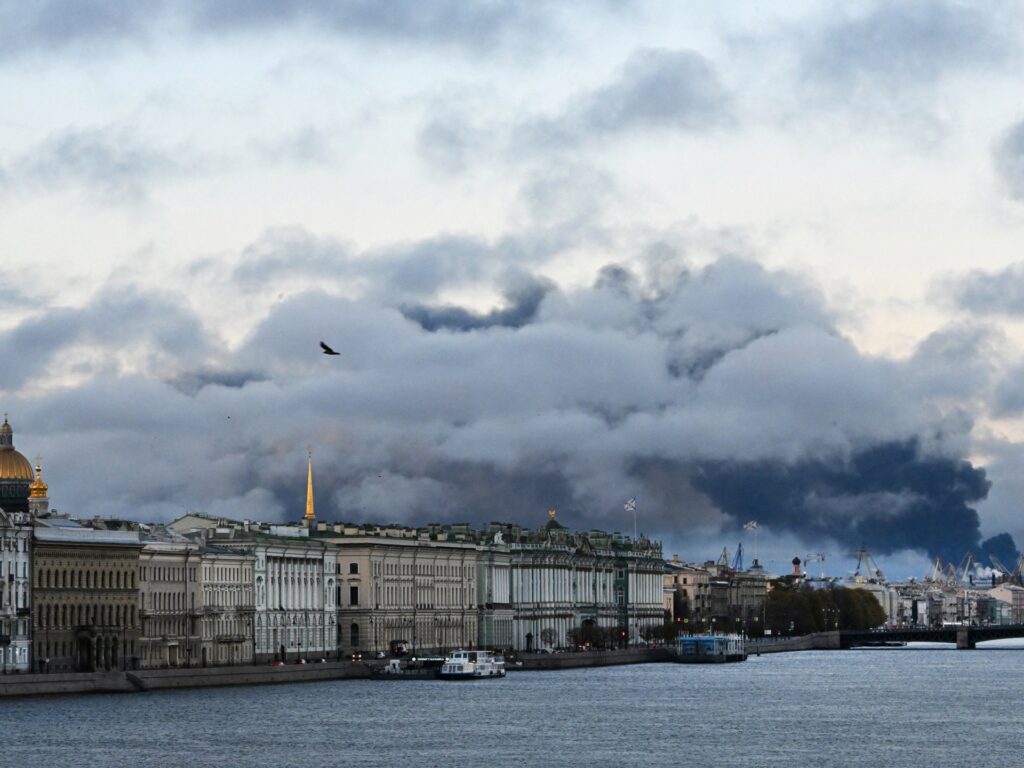
Smoke rose over St Petersburg on 18 October 2026 after a Ukrainian aerial assault on a Russian oil terminal, according to AFP. The strike, one of Kyiv’s largest in the conflict, involved more than a thousand drones and resulted in at least one death and five injuries.
St Petersburg Governor Alexander Beglov said firefighters were battling blazes caused by Sunday’s attacks on the city’s oil terminal, the Ruchi oil depot and industrial warehouses in the Kolpinsky district south of the city. He added that the “massive” raid also hit several residential buildings and two houses.
The assault forced the closure of flights at St Petersburg’s main airport, one of Russia’s busiest, as authorities limited operations for safety reasons. Russian e‑commerce firm Ozon reported a fire at its logistics hub in the city, while internet company VK confirmed drones struck its data centre in the wider Leningrad region, though it said services remained available.
Leningrad Governor Alexander Drozdenko said 145 drones were shot down and roughly 20,000 residents were left without electricity after the raid. The Russian Ministry of Defence reported that 1,015 Ukrainian drones were neutralised overnight across 15 Russian regions, the annexed Crimean peninsula and the Black Sea.
The attacks came amid growing tension between Kyiv and Washington. U.S. President Donald Trump criticised Ukraine’s strikes on Russian oil infrastructure and defended his recent decision to pause new sanctions on Russia, saying he did not want to “foolishly” push Moscow away from the bargaining table. Trump argued that fresh sanctions would undermine diplomatic efforts to end the war, rejecting accusations that he was siding with President Vladimir Putin over Kyiv. He also accused Ukrainian President Volodymyr Zelenskyy of not wanting to end the conflict after Zelenskyy launched the energy strikes.
Trump announced on 11 October that Russia and Ukraine had agreed to an “energy cease‑fire,” though no details were provided. Zelenskyy told the Financial Times that he was “done” with the cease‑fire after Ukraine refrained from hitting Russian energy sites while Moscow continued its attacks on Ukraine. On X, Zelenskyy noted that Russia had struck Ukrainian energy, oil and gas facilities 76 times in the week following Trump’s announcement, leaving tens of thousands of families without power and accusing Moscow of attempting a blackout.
Zelenskyy urged the United States to recognise that Russia was not taking reciprocal steps in response to any relief of sanctions or agreements. Appearing on NBC’s Meet the Press, he warned that waiving sanctions would bolster Putin’s war effort and said intelligence sharing between the United States and Ukraine had resumed after a period of interruption. He cautioned that trusting Trump while siding with Moscow would be a “historic mistake” for Washington.
Later on Sunday, Zelenskyy said he had spoken with U.S. envoys Steve Witkoff and Jared Kushner about the outcome of a 9 October meeting between Washington and Kyiv negotiating teams in Miami and about the next diplomatic steps.
In a separate development, a Russian air strike killed a woman in Kyiv overnight, damaged a subway station and a 25‑storey residential block, and injured three others, Mayor Vitali Klitschko reported on Telegram. The strike also hit non‑residential buildings and a medical facility.
Two Russian attacks on the southern city of Zaporizhzhia killed a woman and wounded at least two people, including a six‑year‑old girl, local officials said. Zelenskyy later posted that Russian strikes on residential structures in Volyn had killed two people and injured twelve, among them two children. He added that an agricultural enterprise in Volyn had been hit but that essential services were operating.
Zelenskyy concluded his statement by noting that in the past week Russia had launched almost 2,700 attack drones, 1,700 aerial bombs and 66 missiles, most of them ballistic, against Ukraine.