
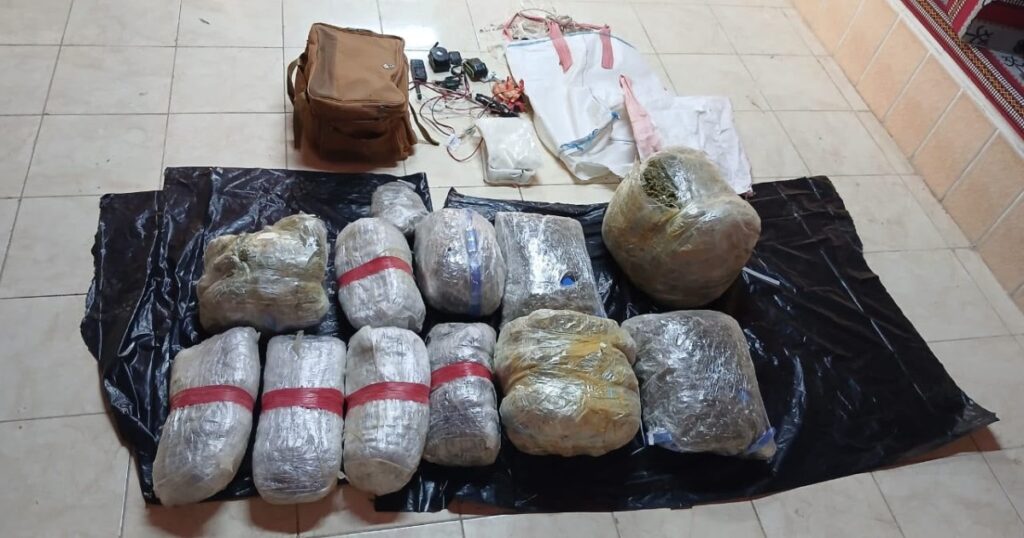
Jordan-Israel frontier emerges as a hub for high‑tech drug trafficking
Amman – Residents of Jordan are increasingly worried that the border with Israel is turning into a major conduit for illegal drugs, as criminal groups adopt sophisticated methods such as drones and helium‑filled balloons. Networks operating in the Negev Desert of southern Israel are reportedly linked to gangs in Jordan and Egypt’s Sinai Peninsula, exploiting one of the world’s most closely monitored frontiers. Jordanian officials say the development could have serious security implications for the kingdom.
The surge in activity coincides with shifts in the regional drug market after the ouster of Syrian President Bashar al‑Assad in late 2024. Elements of his regime had previously been tied to the production and distribution of Captagon, an illegal amphetamine. Syria once served as a hub for shipping Captagon to Gulf markets, with Jordan acting as both a transit point and a consumer market. The Royal Jordanian Air Force carried out periodic strikes on Syrian drug labs and smuggling routes, underscoring the threat the trade posed. Since the collapse of the Assad government and the rise of a new authority that treats the Captagon trade as a national‑security issue, the flow of drugs from Syria into Jordan has declined.
Nevertheless, Jordanian security forces are now concentrating on the Jordan‑Israel border. Gangs in Israel have begun using quadcopter drones and balloons to move hashish, crystal meth and other amphetamines across the frontier. Jordanian officials have expressed frustration at the scale of the operations and have accused the Israeli army of downplaying the problem.
Data released by Jordanian forces show 17 drone‑related interceptions in the first half of 2026 along the southwestern border with Israel, alongside 231 attempts to smuggle or infiltrate contraband and the downing of 56 drones across various frontiers during the same period. Interior Minister Mazen al‑Faraya told Al Jazeera that authorities are intensifying efforts to stop the influx of drugs, but they are confronting increasingly complex smuggling tactics. “We are seeing a rise in drug smuggling from Israel to Jordan using drones,” he said. “So far this year we have seized 15,342 drug cases; trafficking accounts for about 28 percent, while the remaining 72 percent involve usage.”
Israeli media reports link the smuggling to gangs based in the Negev Desert. According to the British Telegraph, a kilogram of hashish can fetch roughly £7,500 (about $10,000) in Jordan, a price roughly fifteen times higher than in Israel. Poverty and disenfranchisement in Palestinian communities inside Israel have also been cited as factors driving involvement in the trade, with some observers accusing Israeli authorities of allowing crime to flourish in those areas to sow division.
Ammar al‑Qudah, a Jordanian senator and retired major‑general from the Public Security Directorate, said organized groups in the Negev have acquired more than 1,000 drones originally intended for agriculture and security. He described a smuggling corridor that begins in Sinai, passes through the Negev, and reaches Wadi Araba, while noting additional routes that run from the Lebanese border with Israel to the Galilee region toward Syria. The gangs employ a range of advanced tools, including GPS‑equipped helium balloons and drones capable of carrying up to 50 kg of narcotics such as black hashish and crystal meth. Al‑Qudah warned that part of the seized substances are sold locally in Jordan, with the remainder destined for other regional markets.
There are allegations that some members of the Israeli military are aware of, or even facilitate, the smuggling operations. A West Point report cited past instances in Egypt where current and former Israeli trackers were recruited by traffickers to provide intelligence for cross‑border drug runs. In 2012, several Israeli service members were arrested on suspicion of colluding with smugglers along the Egyptian frontier. While no concrete evidence has emerged linking similar activity to the Jordanian border, the use of drones and balloons has raised questions about how contraband can cross a heavily surveilled Israeli line.
Jordan’s counternarcotics department, working with the armed forces, continues to monitor these incidents and has made arrests based on the intelligence gathered. Retired Brigadier‑General D