
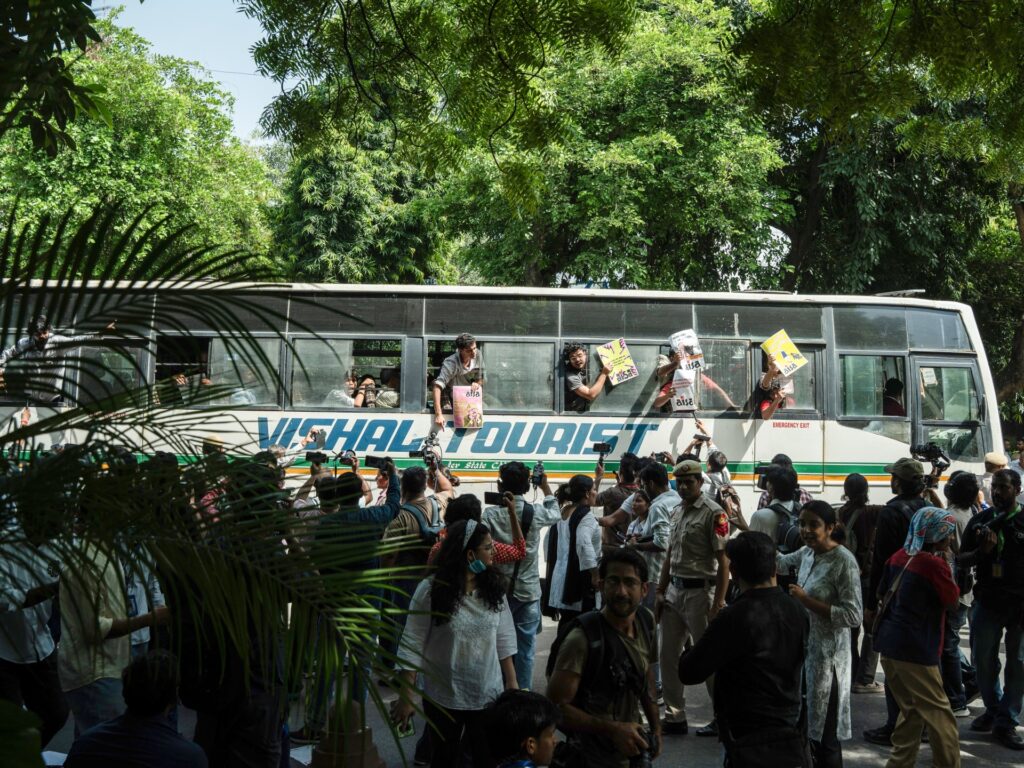
AI-powered platform guides detained protesters back home in Delhi
A 19‑year‑old woman was arrested by police during the youth‑led anti‑government protests that erupted in New Delhi over the weekend. She asked to stay anonymous out of fear of further retaliation. According to her, the detention occurred on Sunday as thousands gathered in central Delhi demanding the resignation of Chief Election Commissioner Gyanesh Kumar, whom they accuse of manipulating electoral rolls and removing 133 million names from voter lists.
After being taken to a police bus, the woman and several other demonstrators were driven about 50 kilometres away from the protest site. With no cash and a dead phone, she spent nearly an hour wandering a dark road, unsure of what to do next. A car stopped and the driver asked if she needed help. She described the moment as a miracle, saying she never expected a stranger to intervene.
The young protester recognized one of the volunteers in the vehicle from videos he had posted online, where he asked detained demonstrators if they needed assistance. That familiar face reassured her that the offer was trustworthy.
The rescue was made possible by an AI‑assisted tool created by 25‑year‑old Rajiv Choudhary. The system, called Detainee Gharwapsi Yojana, combines a digital dashboard with a volunteer network that monitors police buses carrying detainees and arranges transport for those left stranded. “Gharwapsi” means “to return home” in Hindi and also echoes a right‑wing campaign that seeks to bring Muslims and Christians back into the Hindu fold. “Yojana” translates as “plan”.
Since the beginning of the month, New Delhi has seen almost daily protests over alleged electoral fraud by Kumar and his commission. The demonstrations, led by the satirical Cockroach Janta Party, several left‑leaning student groups and the main opposition Congress party, have drawn tens of thousands of participants in the capital and other cities. In response, authorities have imposed a sweeping crackdown, closing roads and metro stations and detaining thousands as Prime Minister Narendra Modi’s government confronts its biggest challenge in twelve years.
Choudhary says his network prioritises minors, the elderly, women and first‑time protesters. The initiative operates through a private digital dashboard that uses AI‑driven data processing, live mapping and information supplied by volunteers via WhatsApp. Volunteers share details such as police bus numbers and locations, allowing the team to coordinate rides home.
Choudhary and journalist Meghnad, who goes by a single name, began with a small group of volunteers who helped detainees obtain transport, legal aid and medical support. Their network has since grown to more than 130 volunteers who contribute time and resources to assist arrested demonstrators. “For people caught up in these demonstrations, the ordeal does not end with detention,” Choudhary explained. “They can be taken far from the protest site and left trying to find their way home from unfamiliar locations, often struggling to contact friends or arrange transport.”
The idea originated from Choudhary’s involvement in an earlier protest organized by the Cockroach Janta Party at Jantar Mantar, a site that authorities have now denotified. He initially coordinated supplies and volunteers there. As the protests continued, he recognised a broader need for systematic support for those detained and abandoned far from the city centre.
When renewed protests began on October 2, Choudhary built a digital system around the volunteer network using AI tools, starting with a simple spreadsheet. “The whole aim behind the application was that I had to systemise things that are not systemised,” he said. He recalled receiving a distress call from a woman who had been detained in central Delhi and released on the outskirts, stranded alone near a dark road. The AI‑driven platform ultimately helped her find a safe ride home.